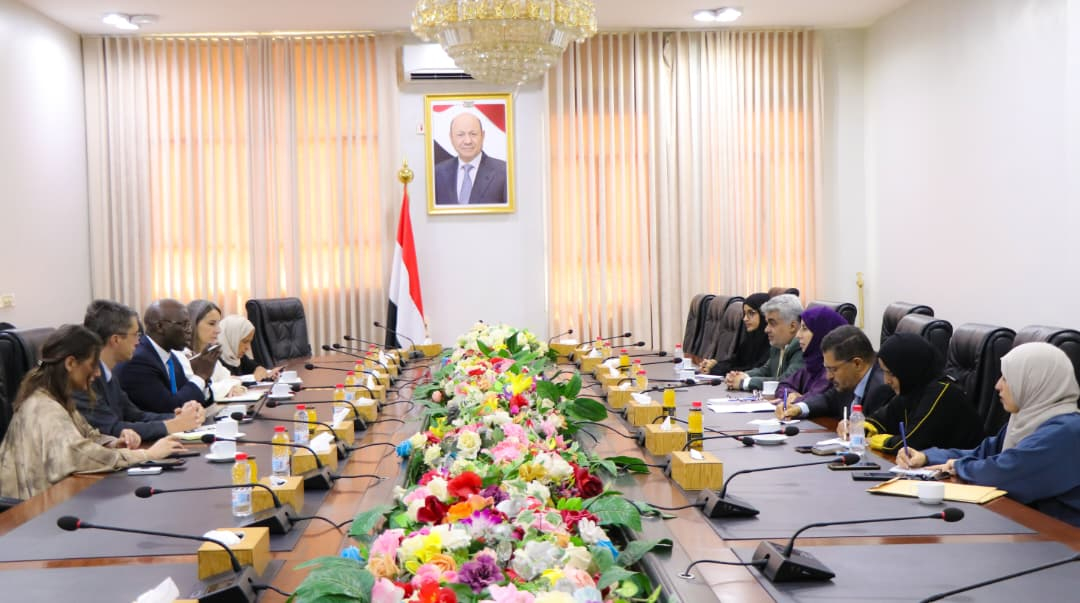
Minister of Planning Discusses Expanding Development Support with World Bank Vice President
World Bank
Meeting
29/03/2026
Aden
Minister of Planning and International Cooperation, Dr. Afrah Al-Zouba, met today in the temporary capital, Aden, with Ousmane Dione, World Bank Vice President for the Middle East and North Africa, Afghanistan, and Pakistan, to discuss joint efforts to expand development support for Yemen and advance the country’s key recovery priorities.
The meeting was attended by Deputy Minister of Planning and International Cooperation Dr. Nizar Basuhaib, deputy ministers and senior officials from the Ministry, World Bank Regional Director Stephane Guimbert, World Bank Country Director for Yemen Dina Abu-Ghaida, and technical specialists from the World Bank.
The discussions reviewed World Bank-financed projects and activities implemented through United Nations agencies and international organizations in the areas of basic services, infrastructure, institutional reform, and capacity building, while exploring additional support needed to enhance the effectiveness of these programmes.
The two sides also discussed Yemen’s current economic and humanitarian situation, the challenges facing the government amid limited financial resources, and the priorities for the next phase, including improving essential public services, supporting economic stability, advancing gradual recovery, and implementing the World Bank’s project portfolio for the current year.
Dr. Al-Zouba welcomed the World Bank delegation’s visit to Aden and commended the strong partnership between the Government of Yemen and the Bank. She reaffirmed the government’s commitment to continued cooperation in support of development and improved living conditions for the Yemeni people.
The Minister stressed the importance of aligning the World Bank’s 2026 project portfolio with the government’s approved priorities and called for increased financial allocations for Yemen in the upcoming funding cycle. She highlighted the urgent need for additional support in the health, education, water, and infrastructure sectors, as well as programmes that promote youth employment and women’s economic empowerment.
Dr. Al-Zouba also emphasized the importance of strengthening coordination with relevant government institutions to improve project implementation, accelerate delivery, ensure the sustainability of development interventions, and maximize their impact on citizens’ lives. She further called for expanding development programmes and gradually shifting from emergency interventions toward sustainable development projects, with greater emphasis on strengthening national institutions and building their capacity to manage programmes effectively and independently.
For his part, Ousmane Dione underscored the importance of strengthening cooperation between the Government of Yemen and its development partners, improving coordination to maximize development impact, making more effective use of available resources, and supporting priority programmes.
Both sides also stressed the importance of transitioning international support from humanitarian assistance toward sustainable development while maintaining assistance for the most vulnerable populations and prioritizing key sectors, particularly energy, infrastructure, and education.